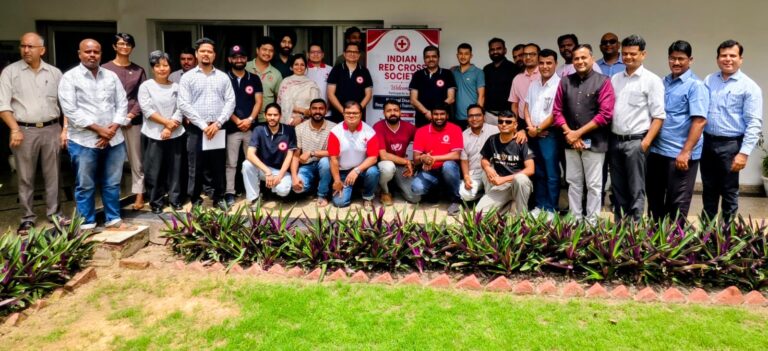
Addressing participants during the inaugural session, Sh. Lalit Wadhwa, Secretary General, IRCS, congratulated the selected team members and highlighted the growing importance of disaster preparedness in view of increasing climate-related disasters, rapid urbanisation, and evolving humanitarian challenges.
Sh. Wadhwa noted that India continues to face a wide spectrum of disasters such as floods, cyclones, earthquakes, landslides, and heatwaves, making robust preparedness essential for effective humanitarian action. He emphasised that the Society’s ability to respond swiftly and efficiently depends on the competence, commitment, and readiness of its trained volunteers and disaster response teams.
He described the National Disaster Response Team as the operational backbone of the Indian Red Cross Society and encouraged participants to actively engage in the training, share experiences, and build strong teamwork. He stressed the need for coordination, discipline, and mutual trust among responders.
The Secretary General urged all participants to uphold the highest standards of professionalism, integrity, and adherence to the Fundamental Principles of the Red Cross and Red Crescent Movement. He reminded them that wearing the Red Cross emblem means representing one of the world’s most respected humanitarian organisations, and their conduct must always earn the trust of the communities they serve.
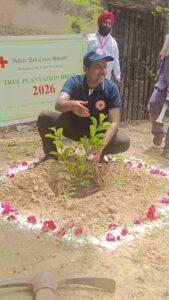
As part of the programme at Bahadurgarh, a plantation drive was organised to promote environmental sustainability and green cover around the training and warehouse facility. The plants grown during the drive include Panda Ficus, Anarmi Hedge, Ashoka Pendula, Ficus, and Areca Palm.
Sh. Wadhwa visited the IRCS Bahadurgarh Warehouse and the Central Training Institute, recognising both facilities as vital assets for logistics management, relief operations, and capacity development. He expressed confidence that continued investment in such infrastructure, along with environment-friendly initiatives like the plantation drive, would further strengthen the Society’s overall preparedness and humanitarian response.
The NDRT Training 2026 reflects the Indian Red Cross Society’s ongoing commitment to building a highly skilled, professional, and compassionate disaster response workforce. Through sustained focus on preparedness, capacity building, and environmental responsibility, IRCS continues to strengthen its ability to support vulnerable communities before, during, and after disasters with dignity and efficiency.